The lesson
Closing time, and the wok is still on
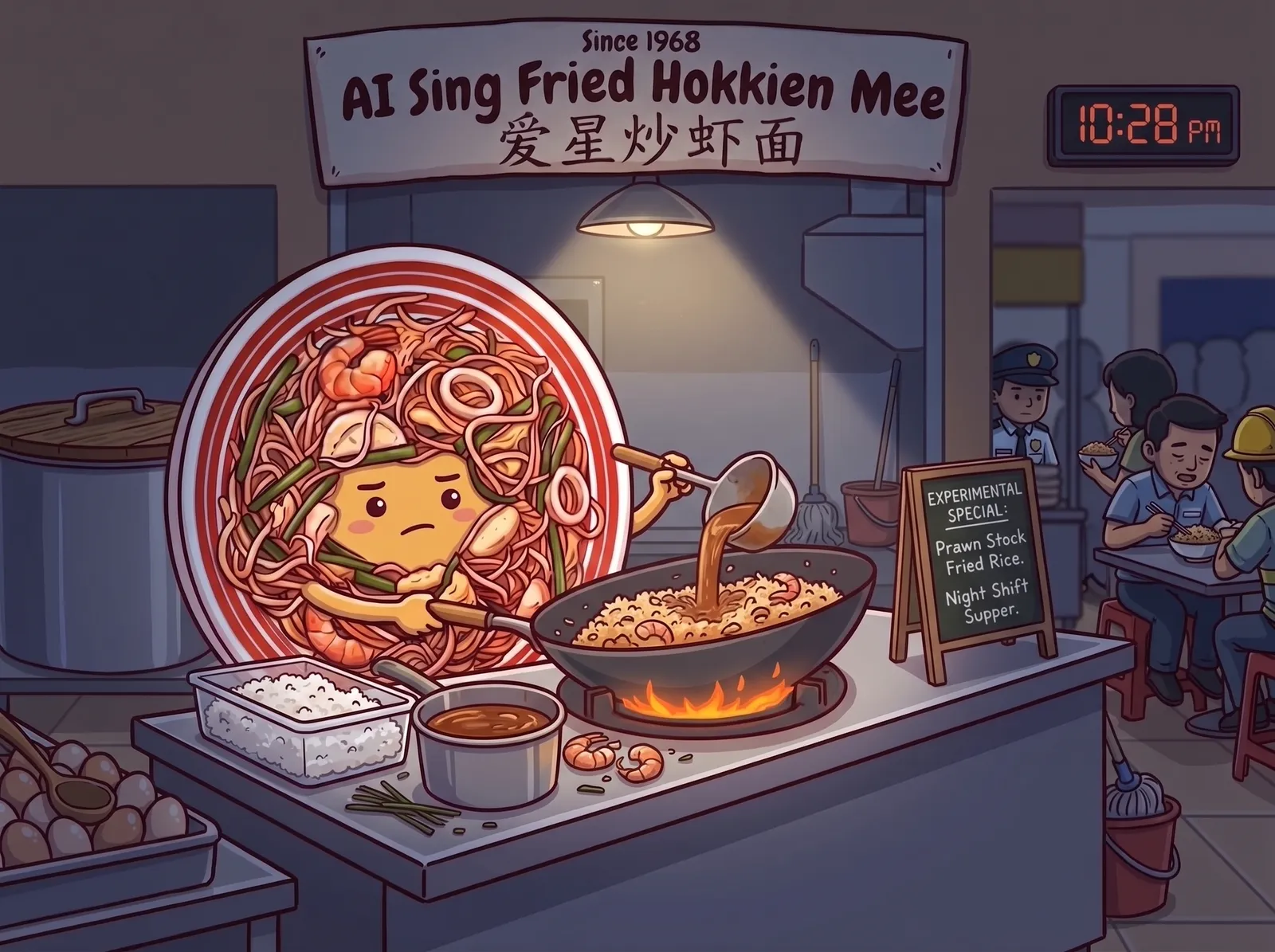
The food centre has gone quiet just after 10 at night. I should be closing. Instead, I stand at my wok with the day’s leftovers. Some leftover prawn stock, and a bowl of cold rice from my neighbour at the next stall. Through the earlier servings, you watched me judge the world. I sorted the prawns. I counted the Friday plates. I grouped my regulars. Tonight I am doing none of that. Tonight I am inventing. And 20 minutes later, the supper crowd from the night shift is eating prawn-stock fried rice, a dish that was born that night.
From predicting to creating
Everything before tonight was predictive AI. The machine studied what already existed and handed you back a label, or a number. Generative AI sounds like a different sport. It produces things that were never on the menu. A picture nobody photographed. A recipe that has never appeared in any book. Yet underneath, it is the same trick, prediction, run at scale. The chatbot on your phone is a large language model. Think of a master chef who has read every recipe in the world, every cookbook and every midnight food forum. He writes the way you speak, 1 word at a time. At every step, he predicts the word that should come next. Given “the wok is hot, so add the”, he weighs everything he has ever read, and sets down “noodles”. Then he does it again, with the sentence 1 word longer.
So where does attention come in? Predicting the next word is easy when the sentence is short. Take a long one: “Ah Ma told the uncle at the fish stall that she wanted the fresh stingray.” To write what follows “she”, the model must know who “she” is. So it looks back. It pays attention to “Ah Ma”, and it lets the uncle fade. Attention is the chef’s glance. At each step, it decides which earlier ingredient matters now. Watch the right words, 1 word at a time, and whole paragraphs come out as if a person cooked them.
The next-word chef in your pocket
You have met this chef in miniature. Your phone suggests the next word while you type. That is a small language model guessing for you. The big ones draft letters and write wedding speeches. Same engine, scaled up, 1 word after another.
Your own engine, tonight
Let me show you your own engine.
Finish this: once upon a… I give you three seconds.
Pause here for three seconds.
Show the answer
… time. The word arrived before you chose it.
Here is another one. The early bird catches the… I give you three seconds.
Pause here for three seconds.
Show the answer
… worm. You just did what a large language model does. You weighed the words in front of you, and you said the likeliest next one. The model does the same. It has read more than any living chef, and it keeps going until the essay is done.