The lesson
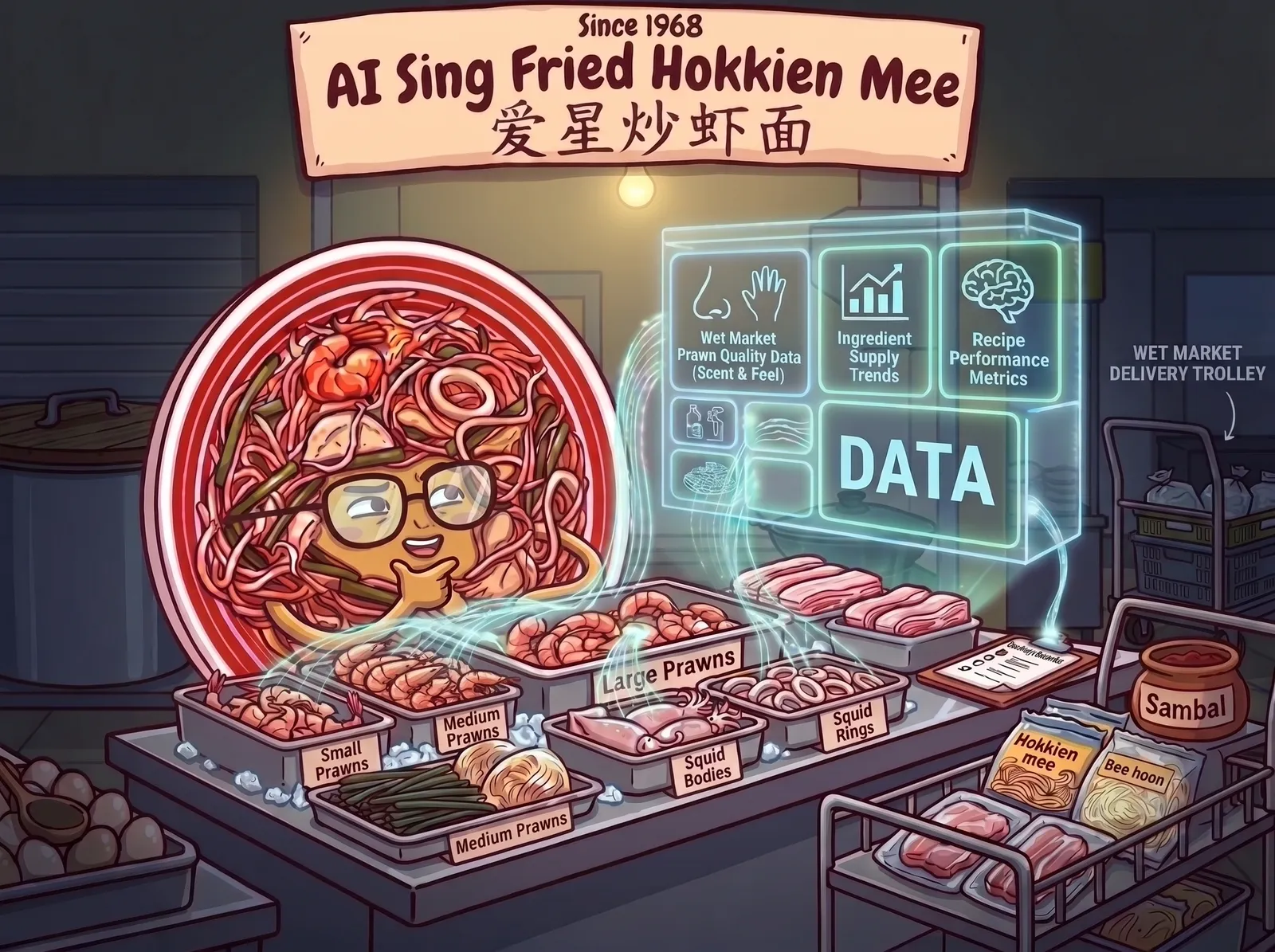
The trolley back from the wet market
I push my trolley back from the wet market at 6 in the morning. The prawns, sotong and meat are on ice, with the noodles by the side. Notice how I unpack my ingredients. My stall keeps two pantries. The first holds the food: noodles, prawns, sotong, meat, and eggs. The second is an invisible pantry. It fills itself all day. And no plate of AI has ever been cooked without it. The ingredient in that second pantry is called data.
Two pantries behind one stall
So what is data? It is not just numbers on a page. Data is anything recorded that a learner can learn from. The orders I get are data. The prawn price is data. So is the length of my queue at 12:30. So is the customers’ chatter, the photo a customer posts of her lunch, and the smell of my stock at 3 p.m. I sort data two ways. Structured data sits in neat rows, like how I stack my plates, how many plates of Hokkien Mee I sell per hour and the price list. Machines have read that happily for decades. Unstructured data is the customers’ chatter, the photos, the smells. Humans can read and make sense of these at a glance. However, one kitchen law covers both kinds of data. Good ingredients in, good plate of Hokkien Mee out. Stock made from prawns that are not fresh, and the most skilled uncle in Singapore cannot save the dish. He will end up serving a bad plate of Hokkien Mee. Bad data works the same way. We call this: rubbish in, rubbish out.
The structured shelf and the messy one
The two pantries sit side by side everywhere. On the structured shelf: the number of plates sold, and the cash collected today. Those rows are so tidy that the oldest computers could already total them. On the unstructured shelf: a tourist asking which size to order, and an aunty saying the sambal was better last month. That shelf stayed locked to machines for decades, because the technology was not there yet. Reading and understanding this second pantry of unstructured data is the story of modern AI, because the world keeps most of its knowledge in chatter and in pictures.
Walk the day in your head
Now imagine the stall in your head, from morning to night. From the lights coming on to the last plate of Hokkien Mee served. List everything my stall collects. I give you three seconds.
Pause here for three seconds.
Show the answer
… How long each customer waited, which ingredients ran out first, and the weather report for tomorrow.
You already know about the plates sold and the cash collected. The three above are the ones you probably did not think about, and I track them all. Each one predicts tomorrow before tomorrow happens. And predicting is the job of a learning machine.