
The lesson
The weather report before the wok
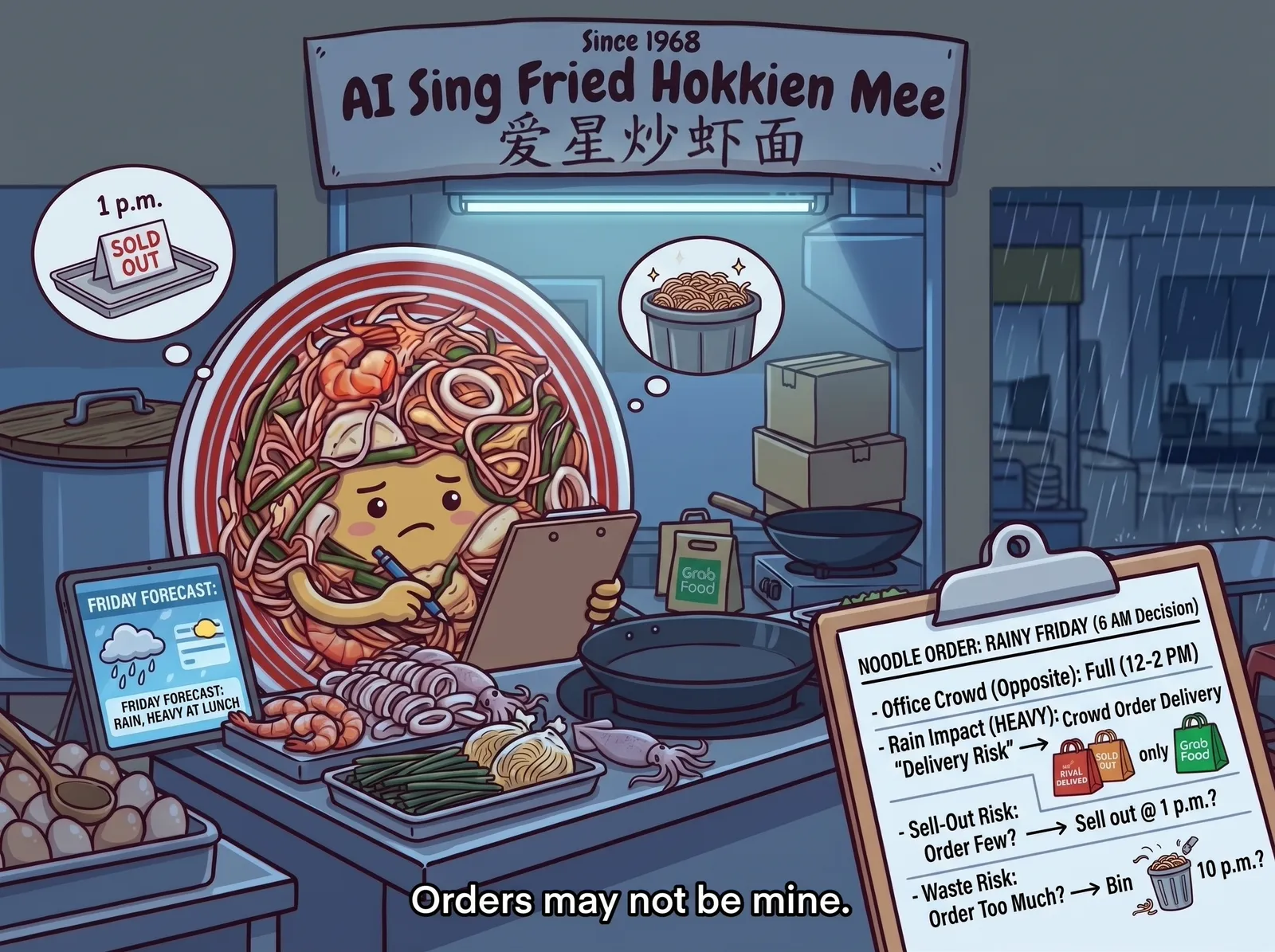
I normally sell about 300 plates a day. The weather report says heavy rain at lunchtime. For most people, that is a hassle. For me, it is a number. The offices opposite are full, but in heavy rain part of that crowd orders delivery instead. And those orders may not be mine. Order too few noodles, and I sell out at 1 p.m. Order too much, and I am feeding the rubbish bin at closing. How many noodles I throw away tonight is a number between the two. And I have to order the noodles by 6 this morning.
Thousands of Fridays, one feel
This is where experience counts. I have served through thousands of Fridays and have a feel for the answer. The rain. The day of the week. Whether the office tower opposite is on holiday. I cannot write the formula down for you. But ask me for a rainy Friday, lunch peak, full offices, and I will give you a number that is close. That is regression: predicting a number from the factors that move it. A machine fed the same history does the same job, and it can hold more Fridays than any hawker could live through. So classification sorts things into groups. Regression puts a number on the table.
The number behind the bus app
You met this model today without noticing. The bus app that says 4 minutes to arrival is regression. The supermarket deciding how many packets of yellow noodle to stock this week is regression. Past patterns in. One number out. And no, 4D and TOTO are not regression.
Your Friday to call
Let me give you a Friday.
There is rain at lunchtime. The offices opposite are full. How many plates will I sell? I give you three seconds.
Pause here for three seconds.
Show the answer
… 145.
If you landed between 130 and 160, you did exactly what the model does. The rain pulled you down. The offices pulled you up. You committed to a number. The model has seen more Fridays than you.