The lesson
The crate at half the price
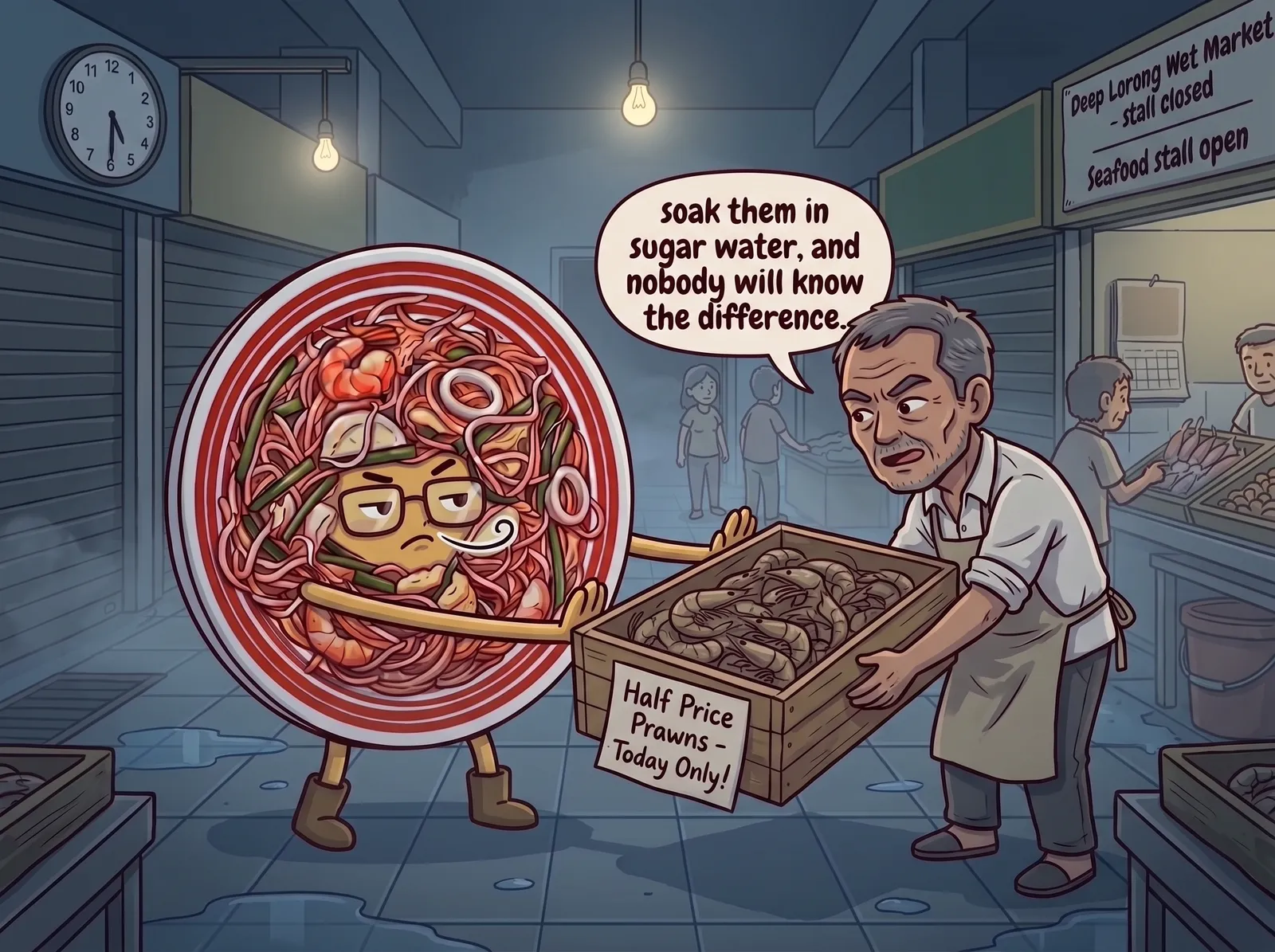
It is 5:30 in the morning, and the market is half asleep. The prawn seller slides me a crate, and the price is half of usual. One sniff tells me why. The prawns turned bad yesterday. He leans close and says, soak them in sugar water, and nobody will know the difference. And he is right. Nobody would know. Not the inspector. Not the customers. Not the reviewers. I hand the crate back, because my stall runs on 1 promise: only the freshest, or nothing.
The standard nobody checks
That choice is the whole of ethics, and it fits in 1 sentence. Ethics is the standard you keep when nobody is checking. The people who build AI stand at the same stall every morning. Their ingredients are your data. Your photographs. Your words. Your searches. Your face. So the first question of AI ethics is a market question: did they ask before they took? The second is a menu question: did they tell the truth about what the dish can do, or did they overclaim? A machine has no conscience, and no law of maths will grow one. The conscience has to live with the people who choose the ingredients. A promise with nobody behind it is just marketing.
Taken without asking
This has already left the kitchen. Writers opened a famous chatbot and asked it about their own books. It quoted their sentences back. Their words were in the training data, and nobody had ever asked them. Cities discovered that face recognition systems had learnt from millions of ordinary photographs, scraped from websites, with no permission slip anywhere. In both cases, the ingredient was used. The person whose data was used was never told.
You hold the keys
So here is my morning question for you. A company has a chatbot, and it is hungry for data. One: it quietly keeps every photo you upload, to make itself smarter. Two: it sells your questions to advertisers, because the money is good. Three: it asks you first, keeps only what you say yes to, and tells you what it can and cannot do. Which one keeps the promise? I give you 3 seconds.
Pause here for three seconds.
Show the answer
… The third, and you knew it before I finished asking.
But note what the third one costs. It is slower. It gathers less. And it earns trust instead of snacks. That is the honest trade, and ethics is choosing it anyway, at 5:30 in the morning, in the dark.