The lesson
The crowd sorts itself
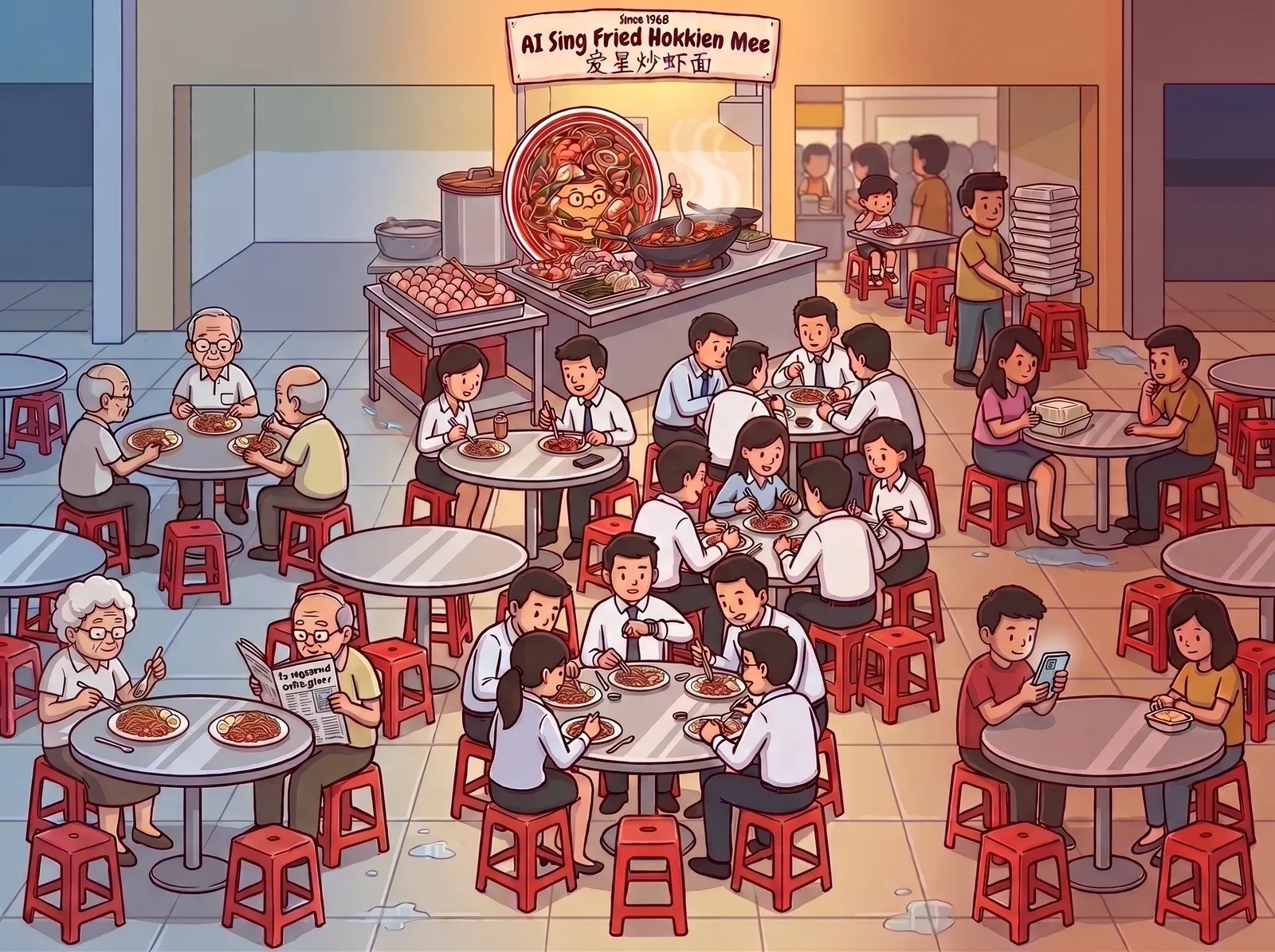
Sit at the corner table next to my stall for a week, and you can watch the crowd sort itself. The early uncles arrive before 7. They ask for extra wet, and they take their time reading. The lunchtime crowd comes at noon, wants less chilli, and finishes quickly in 15 minutes. The late group of office workers straggles in past 8. Always takeaway. Always the largest size. Nobody organised any of this. The groups were there all along.
Learning with no answer key
Everything so far needed a teacher. Classification learnt from prawns that somebody had already labelled fresh or spoiled. Regression learnt from Fridays that somebody had already counted. Nobody has ever labelled my customers. Yet the patterns are there. You can set a machine to identify them. That is clustering. You hand it a pile of unlabelled things, and it groups them by similarity, with no answer key. It cannot tell you what the groups mean. It can only say they exist.
Groups the shop never named
This is how shops identify customer types they never defined. A supermarket with a million shoppers lets a clustering model run overnight. By morning, it reports that the shoppers fall into a handful of natural styles. Among them: the weekly family shopper and the promotion hunter. Music services do the same to build mood mixes nobody names in advance.
Sit at my corner table
Come, sit at my corner table for the day.
An uncle who came for breakfast and stayed for the newspaper. A nurse on a late shift, takeaway, largest size. A student, 1 laptop, 1 kopi, 2 hours. A technician, also takeaway, also largest size. A retired teacher reading the same paper. Which ones belong together? I give you three seconds.
Pause here for three seconds.
Show the answer
… The readers: the uncle and the retired teacher. The night workers: the nurse and the technician, same order, same hour. The student sits between them, a group of 1, and a clustering model would say exactly that.